Sediments, Seagrass, and the Sea: Inside the Pacific's Natural Carbon Storage System
At first glance, the floor of the Pacific Ocean appears desolate—a cold, dark expanse of silt and rock stretching across the planet's largest geographic feature. But to the scientists who extract and analyze sediment cores from these depths, that unremarkable-looking muck is something closer to a historical archive. Layered within it are centuries of compressed organic matter, the remnants of marine organisms that sank, settled, and were sealed away from the atmosphere long before the Industrial Revolution began altering Earth's climate.
This is the domain of blue carbon science, and researchers affiliated with institutions along the Pacific coast are increasingly focused on what these underwater repositories can tell us—and whether humanity can work with, rather than against, the ocean's natural carbon management systems.
What Is Blue Carbon, and Why Does the Pacific Matter?
Blue carbon refers to the carbon captured and stored by coastal and marine ecosystems—primarily mangroves, tidal marshes, seagrass beds, and, more recently under scientific discussion, kelp forests and deep-sea sediments. Unlike terrestrial forests, which cycle carbon relatively quickly through decomposition, coastal marine ecosystems can sequester organic carbon in waterlogged, low-oxygen sediments for millennia. That long-term burial is what makes them so scientifically compelling.
The Pacific Ocean, covering more than 60 million square miles, is not a monolithic system. It encompasses tropical mangrove coastlines in Hawaii and the U.S. territories of Guam and American Samoa, temperate kelp forests stretching from Alaska down through California, and expansive seagrass meadows in shallower nearshore zones. Each of these habitat types sequesters carbon at different rates and through different mechanisms, and the Pacific's sheer scale means that even modest improvements in ecosystem health could translate into significant climate benefits.
Recent survey work conducted along the California coast has underscored how much carbon is already stored in these systems—and how much has been lost. Degraded coastal wetlands, many of which were drained for agriculture or development over the past century, are now net carbon emitters rather than sinks. Restoring them, researchers argue, could flip that equation.
Drilling Down: What Sediment Cores Reveal
One of the primary tools researchers use to assess the Pacific's carbon storage capacity is the sediment core—a cylindrical sample extracted from the seafloor that preserves thousands of years of biological and chemical history in its layers. By analyzing the carbon content, age, and composition of these cores, scientists can reconstruct how much organic material has accumulated over time and at what rate.
Findings from cores taken in the Santa Barbara Basin, a naturally low-oxygen zone off the Southern California coast, have proven particularly instructive. The basin's anoxic conditions inhibit the microbial decomposition that would otherwise release stored carbon back into the water column, creating ideal conditions for long-term sequestration. Similar conditions exist in other Pacific basin regions, suggesting that certain geographic and oceanographic features may naturally amplify the ocean's carbon-holding capacity.
Researchers are also examining the role of mineral-organic associations—the process by which organic carbon bonds to mineral particles in sediments, making it far more resistant to degradation. Understanding these chemical relationships may eventually allow scientists to identify which seafloor environments are most valuable to protect and which restoration strategies are most likely to enhance natural sequestration.
Kelp Forests: Carbon Sink or Carbon Conveyor?
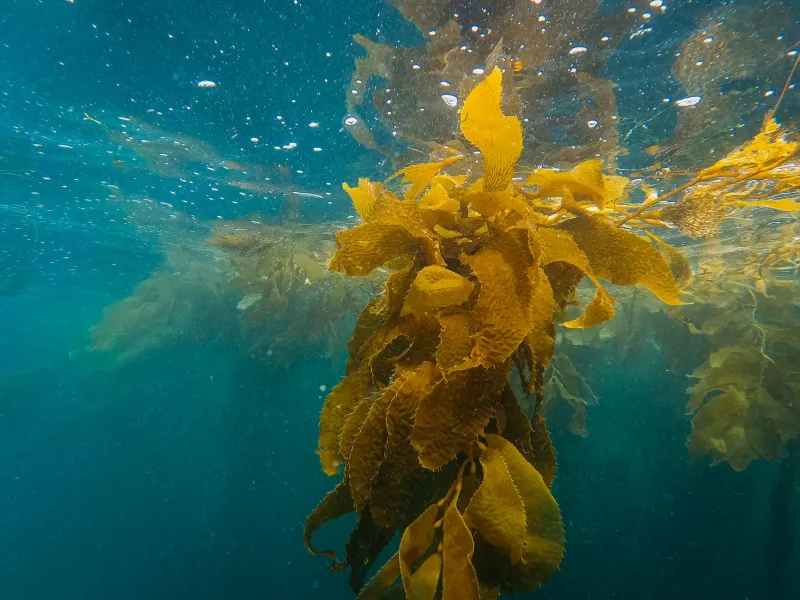
Among the most debated questions in Pacific blue carbon science is the role of kelp forests. These towering underwater ecosystems, found in abundance off the coasts of California, Oregon, and Washington, are among the most productive marine habitats on Earth. Giant kelp (Macrocystis pyrifera) can grow up to two feet per day and form dense canopies that support thousands of species.
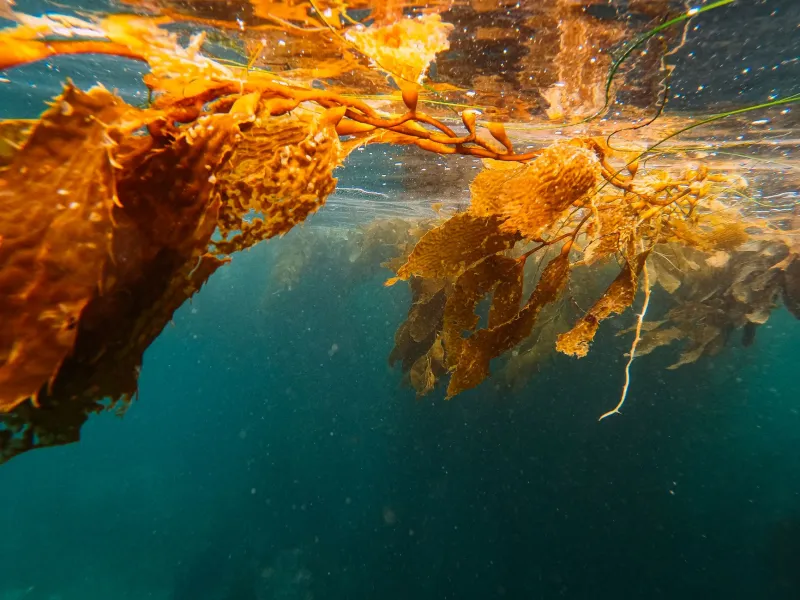
From a carbon standpoint, kelp is highly productive—it absorbs substantial amounts of CO₂ through photosynthesis. The critical question is what happens to that carbon after the kelp dies. If decomposition occurs near the surface, the carbon is released back into the water and atmosphere relatively quickly. But if kelp biomass sinks to the deep ocean or becomes incorporated into sediments, the carbon may remain sequestered for far longer.
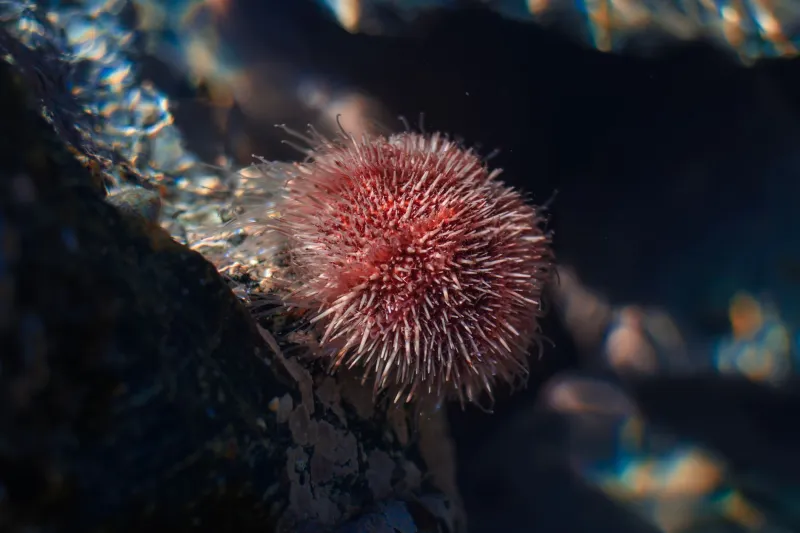
Recent tracking studies using drift experiments and isotopic analysis suggest that a meaningful fraction of Pacific kelp does indeed export carbon to deeper waters, though the precise percentages remain an active area of inquiry. Efforts to restore kelp forests—which have declined dramatically in parts of Northern California due to sea urchin population explosions and warming waters—are therefore being evaluated not just for their ecological value, but for their potential contribution to carbon accounting.
Mangroves at the Margins: Restoration Along U.S. Pacific Territories
While kelp science grapples with methodological complexity, mangrove restoration offers a more established blue carbon framework. Mangrove forests are among the most carbon-dense ecosystems on the planet, storing up to four times as much carbon per acre as tropical rainforests, primarily in their deep, waterlogged soils.
In U.S. Pacific territories such as Guam, the Commonwealth of the Northern Mariana Islands, and American Samoa, mangrove ecosystems have been significantly reduced by coastal development, storm damage, and invasive species. Restoration projects in these areas, some of which are supported by federal and territorial environmental agencies, are beginning to incorporate carbon measurement protocols that could eventually qualify restored mangrove acreage for carbon credit markets.
The challenge lies in verification. Carbon markets require rigorous, long-term monitoring to confirm that sequestered carbon stays stored. Building that monitoring infrastructure in remote Pacific island settings is logistically demanding and expensive—a barrier that has slowed broader adoption despite genuine ecological and climatic potential.
Barriers to Scale: Science, Policy, and Economics
The scientific community is broadly optimistic about the Pacific's blue carbon potential, but translating that optimism into large-scale climate policy requires overcoming substantial obstacles.
Methodological standardization remains a pressing issue. Different research groups use different protocols for measuring carbon stocks and sequestration rates, making it difficult to aggregate findings or establish defensible baselines for carbon crediting. International bodies, including the Intergovernmental Panel on Climate Change, have begun incorporating blue carbon into national greenhouse gas inventory guidance, but the frameworks are still evolving.
Policy coordination presents another layer of complexity. Pacific coastal ecosystems often span federal, state, tribal, and territorial jurisdictions, each with its own regulatory structures and management priorities. Effective restoration at scale requires alignment across these entities—a process that has historically moved slowly.
Funding, too, is uneven. While philanthropic and federal investment in blue carbon research has grown in recent years, it remains a fraction of what flows into terrestrial carbon sequestration projects. Closing that gap will likely require both clearer scientific consensus and stronger market incentives.
A Resource Worth Protecting
Despite these challenges, the trajectory of Pacific blue carbon science is encouraging. Advances in remote sensing technology are enabling researchers to map coastal carbon stocks with greater precision than ever before. Genomic tools are shedding light on the microbial communities that govern carbon cycling in marine sediments. And a growing coalition of coastal communities, tribal nations, and conservation organizations is advocating for ecosystem restoration on grounds that go well beyond carbon—encompassing water quality, fisheries productivity, and shoreline resilience.
The Pacific has always been a place of immense biological and geological complexity. As climate pressures mount, the science emerging from its depths and shallows alike is beginning to reveal just how much that complexity matters—not only for the organisms that depend on it, but for the stability of the climate systems that sustain human civilization.