Light from the Deep: How Pacific Ocean Organisms Are Illuminating the Future of Medical Diagnostics
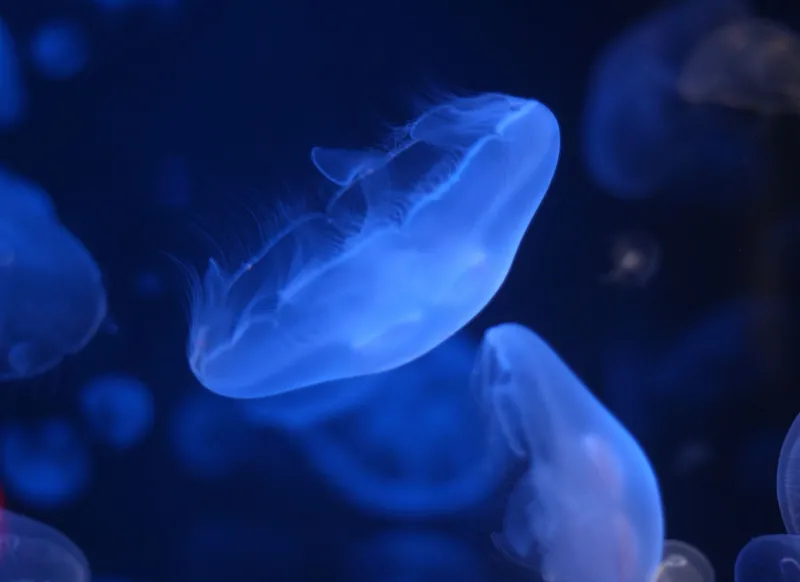
In 1962, a Japanese-born chemist named Osamu Shimomura hauled thousands of crystal jellyfish (Aequorea victoria) from the waters of Puget Sound and began squeezing them by hand to extract a faintly glowing protein. It was painstaking, unglamorous work—the kind that rarely makes headlines. But the molecule Shimomura isolated from those Pacific jellyfish, which he named green fluorescent protein, or GFP, would eventually earn him a share of the Nobel Prize in Chemistry and quietly transform the way scientists visualize living cells.
Decades later, the scientific descendants of that discovery are still drawing from the Pacific's bioluminescent treasury. Researchers at biomedical institutions across the United States are reverse-engineering light-producing proteins from jellyfish, squid, and microscopic algae to build diagnostic tools with capabilities that would have seemed fantastical a generation ago. The goal, in many cases, is deceptively simple: make disease visible.
The Biology of Living Light
Bioluminescence—the biological production of light through chemical reactions—has evolved independently in marine organisms dozens of times over evolutionary history. In the Pacific, it is remarkably widespread. Certain species of deep-sea squid carry photophores, specialized light-emitting organs, on their bodies. Dinoflagellates, single-celled algae that form massive blooms in Pacific coastal waters, produce flashes of blue light when physically disturbed—the source of the glowing waves that periodically mesmerize beachgoers along the California coast. And numerous species of jellyfish, including Aequorea victoria, produce light through a cascade of protein interactions that researchers have spent decades working to understand.
At the molecular level, most bioluminescent systems rely on a light-emitting compound called a luciferin and an enzyme called a luciferase that catalyzes the oxidation reaction producing light. In GFP and related fluorescent proteins, the mechanism is slightly different: the protein absorbs light at one wavelength and re-emits it at another, producing the vivid colors—green, red, yellow, cyan—that have become familiar tools in biological imaging.
What makes these proteins so useful in medicine is their ability to act as molecular beacons. By genetically linking a fluorescent or bioluminescent protein to a specific biological molecule—a cancer marker, a viral protein, a gene of interest—scientists can track that molecule's behavior inside living cells and tissues in real time, without the need for invasive procedures or toxic chemical dyes.
From Jellyfish to the Clinic: Cancer Imaging Applications
Cancer diagnosis has historically relied on a combination of imaging technologies—X-ray, MRI, CT scanning—and tissue biopsies. Each has limitations. Imaging modalities often struggle to detect small tumors or distinguish cancerous from healthy tissue with precision. Biopsies are invasive and sample only a small portion of a potentially heterogeneous tumor.
Bioluminescent imaging offers a complementary approach. By engineering cancer cells to express luciferase proteins derived from marine organisms, researchers can make tumors literally glow in laboratory and animal models, allowing scientists to track tumor growth, metastasis, and treatment response with exceptional sensitivity. In preclinical studies, luciferase-based imaging has demonstrated the ability to detect tumor masses far smaller than those visible on conventional scans.
A particularly promising development involves the use of NanoLuc, a compact luciferase derived partly through the study of deep-sea shrimp bioluminescence. NanoLuc produces a brighter, more stable signal than earlier luciferase variants and can be engineered into a range of molecular configurations—including split-protein systems that only produce light when two specific molecules interact. This capability opens the door to highly specific detection of protein-protein interactions that are central to cancer biology, including those that drive drug resistance.
Researchers at institutions including the University of California system and the Salk Institute for Biological Studies in La Jolla—both with deep ties to Pacific marine research—have been exploring how these tools can be adapted for eventual clinical translation, though significant engineering and regulatory work remains before bioluminescent diagnostics become routine medical practice.
Dinoflagellates and the Quantum Mechanics of Light
While jellyfish proteins have dominated the bioluminescence-in-medicine conversation, Pacific dinoflagellates are attracting growing scientific attention for a different set of reasons. Species such as Lingulodinium polyedra—the organism responsible for many of California's famous red tide light shows—produce light through a mechanism involving specialized proteins called lumazine-binding proteins, which interact with their luciferase system to produce unusually efficient light emission.
What has particularly intrigued biophysicists is evidence suggesting that dinoflagellate bioluminescent systems may exploit quantum mechanical processes to achieve their remarkable photon output efficiency. If confirmed, this would have implications extending far beyond marine biology—potentially informing the design of more efficient biosensors, light-emitting devices, and even solar energy systems.
For medical applications, the efficiency of light production matters enormously. In biological imaging, particularly in deep tissue, signal strength diminishes rapidly as light passes through biological matter. A more photon-efficient bioluminescent system could enable imaging at greater tissue depths, potentially bringing bioluminescent diagnostics closer to clinical utility in humans.
Squid Proteins and the Gene Therapy Frontier
Gene therapy—the treatment of disease by correcting or compensating for faulty genes—is one of the most rapidly advancing areas of modern medicine. Delivering genetic material into target cells reliably and safely remains one of the field's central technical challenges. Bioluminescent proteins from Pacific squid species are contributing to solutions.
Researchers have developed reporter systems using squid-derived fluorescent proteins to monitor gene therapy delivery in real time. By tagging therapeutic genetic constructs with a fluorescent marker, scientists can track whether the construct successfully enters target cells, where it localizes within those cells, and how long it remains active—information that is essential for evaluating and refining delivery strategies.
Beyond monitoring, some research groups are exploring whether the structural properties of bioluminescent proteins themselves might be harnessed for therapeutic purposes. Certain marine proteins have demonstrated the ability to interact with cell membranes in ways that could facilitate drug or gene delivery, though this research remains largely in early experimental stages.
The Conservation Dimension
There is an irony embedded in the story of Pacific bioluminescence and medicine. The organisms whose molecular machinery is driving these advances—jellyfish, squid, dinoflagellates—inhabit ecosystems that are under increasing pressure from warming oceans, acidification, pollution, and habitat degradation. The same Pacific that has functioned as a biological library for decades of biomedical innovation is itself in need of scientific attention and protection.
Some researchers working at the intersection of marine biology and biomedicine have begun advocating explicitly for the conservation value of marine biodiversity as a medical resource. The argument is straightforward: we cannot know which organisms harbor the next GFP, the next NanoLuc, the next molecular tool that transforms a field of medicine. Protecting the ecological conditions that allow Pacific marine life to persist is therefore not only an environmental imperative but a scientific one.
This perspective is gaining traction in funding conversations and is beginning to influence how some biomedical institutions frame their relationships with marine research programs. Collaborative projects linking Pacific marine laboratories with biomedical research centers are becoming more common, and the scientific rationale for those collaborations grows stronger with each new discovery emerging from the ocean's living light.
A Living Laboratory
Osamu Shimomura's jellyfish-squeezing expeditions in Puget Sound may seem, in retrospect, almost quaint—a lone scientist and buckets of marine invertebrates yielding a molecule that would reshape biology. But the scientific logic underlying that work remains as sound as ever: the Pacific Ocean, shaped by hundreds of millions of years of evolution, has solved biological problems that human ingenuity is only beginning to approach.
As the tools of molecular biology become more sophisticated and the medical challenges facing an aging U.S. population grow more complex, the organisms glowing in Pacific waters offer something rare and genuinely valuable—solutions we have not yet fully learned to read.